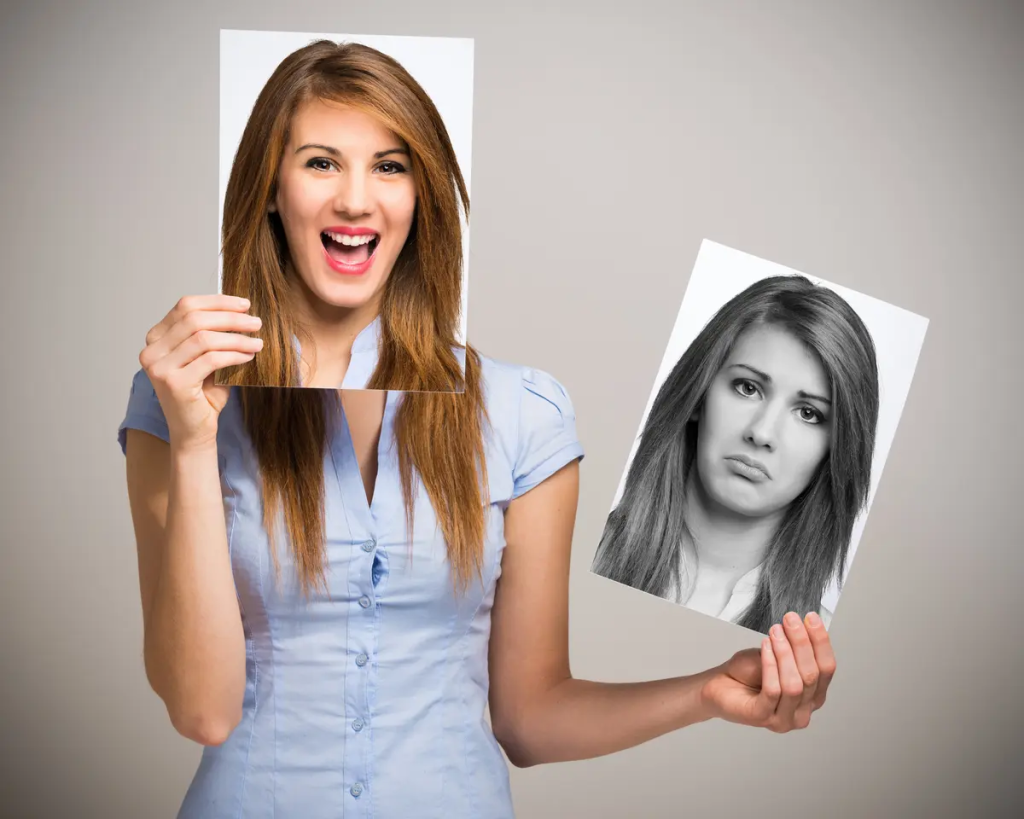
Women who wear their emotions on their faces. Facial expressions reveal a range of emotions—joy, anger, sorrow, and happiness. We can gauge how someone is feeling just by looking at their face—noticing, for instance, that someone looks radiant with happiness or deeply sad.
People who openly display their emotions tend to be more likable and approachable. Conversely, a lack of facial expression can evoke a sense of unease—leaving others wondering what the person is thinking—and create an impression of inaccessibility. Therefore, those who know how to effectively use facial expressions to convey their feelings often have a social advantage.
Women Are Experts at Conveying Emotions Through Facial Expressions
Dr. Werner Wallbott of the University of Giessen in Germany conducted a study involving twenty men and twenty women. He photographed their facial expressions and then asked participants to interpret the emotions conveyed in the images.
The results clearly showed that women’s expressions were much easier to interpret than men’s. When expressing happiness or joy, women tend to use more exaggerated facial expressions, making their feelings instantly recognizable to others. In contrast, men’s expressions of joy are subtle; because their faces often remain relatively impassive, it is difficult to discern their true emotions.
Men Are Skilled at Using Expressions of Displeasure in Negotiations
In Wallbott’s experiment, the one emotion men excelled at conveying was anger. When instructed to display an angry expression, they could easily produce a convincing look of anger.
Although women are adept at conveying emotions through facial expressions, they are—for some reason—not particularly good at expressing anger. For example, a woman who struggles to show anger might face persistent, unwanted advances from a man she dislikes; even if she wants to snap at him, she may not show an angry face, leading him to misinterpret the situation and pursue her even more aggressively.
While men may not be naturally inclined to smile, they can employ sophisticated negotiation tactics in business settings—such as deliberately displaying an expression of displeasure to induce the other party to make concessions.
Women are often praised for being friendly and approachable precisely because they are so expressive. Men, on the other hand, rarely wear their thoughts on their faces, which can give the impression that they are cold or distant. If both men and women make a conscious effort to show a big smile, they will likely be perceived by others as friendly and approachable. This, in turn, can make things go much more smoothly in both interpersonal relationships and romantic life.
Furthermore, women tend to express their feelings openly. Because they are emotionally expressive, they might sulk immediately after being scolded or feel overjoyed—as if on cloud nine—upon receiving a gift.
In contrast, men often hesitate to express their emotions. Even when receiving good news, such as a promotion, a man might offer only a brief response. When facing something sad, he may not even allow himself to shed a single tear.
Although men often maintain a blank expression—as if wearing a mask—this does not mean they are unfeeling like machines. Men possess rich emotions; they simply are not as adept at expressing them as women are.
How can one create an approachable impression?
Wendy Wood, a professor at the University of Southern California, asked dozens of men and women to rate the extent of their emotional expression—covering feelings like love, joy, sadness, and fear—on a scale of 15. The results showed an average score of 7.93 for men and 9.34 for women. Wood then asked the participants to rate the intensity of these emotional expressions; this time, the average scores were 7.87 for men and 8.93 for women.
These results indicate that women express their emotions more frequently and more visibly than men do.
Women tend to wear their hearts on their sleeves, making them seem easy to get along with. Their emotions are easily read—one might think, “Oh, she looks happy,” or “She seems bored.” Because people whose thoughts and feelings are transparent are easier to understand, they come across as approachable.
On the other hand, someone whose thoughts are a complete mystery can feel difficult to approach. For male readers who feel they aren’t good at expressing emotions, making a conscious effort to show their feelings to others can help create a more approachable impression. In terms of gender, men are generally less adept at expressing their emotions than women, which can make them seem difficult to get along with; regarding age, children express their emotions openly and are easy to interact with, but as boys grow older, they tend to suppress their feelings, making them increasingly hard to approach.
▲ [In the workplace, saying this really helps!]
To men: “That’s fantastic!”
When something good happens, encourage him to share in the joy.
To women: “Let’s solve this together—don’t shoulder the burden alone!”
Offer a helping hand to women who struggle to manage feelings of anger.