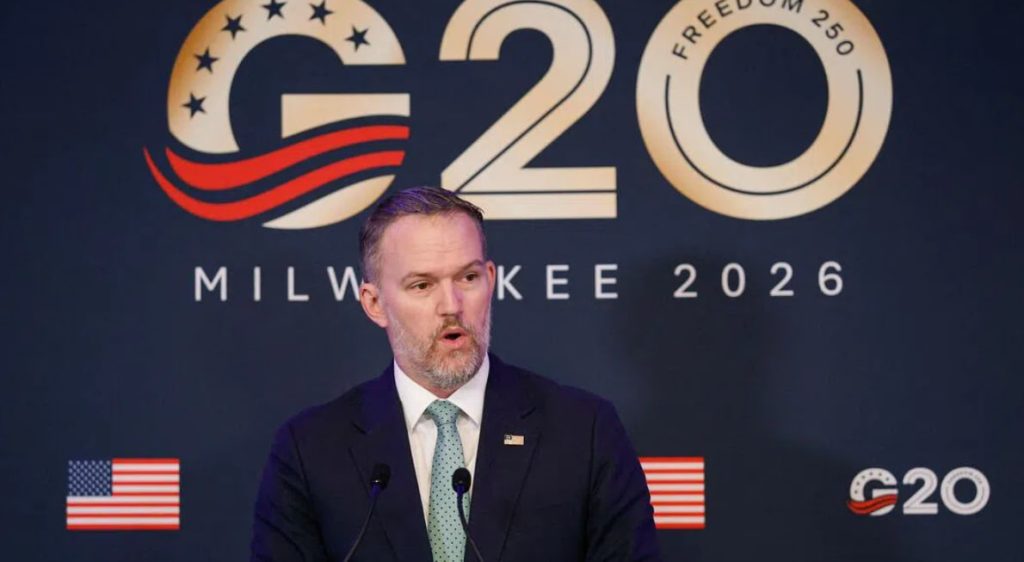
G20 trade ministers agreed to condemn the weaponization of food through coercive trade practices but failed to reach a consensus on condemning forced labor in supply chains or addressing the issue of structural industrial overcapacity.
According to Reuters, the two-day G20 trade ministers’ meeting was held in Milwaukee, Wisconsin, and chaired by U.S. Trade Representative Greer.
Speaking at a press conference on the second day of the meeting (October 1), Greer noted that many participating trade ministers expressed deep concern regarding industrial overcapacity—particularly in China—viewing it as a cause for the flooding of markets worldwide with cheap exports.
Greer stated, “Almost all countries agreed that this is a problem requiring action. They also agreed that existing trade remedies or response mechanisms are insufficient to address the issue.”
He explained that this is precisely why the United States has taken unilateral tariff actions to protect its domestic industries.
Greer did not specify which countries held opposing views. However, a month earlier at a G20 finance ministers’ meeting in Asheville, North Carolina, China had opposed a similar statement that condemned forced labor and non-market economic policies leading to excessive exports.
Greer said, “The United States will continue to engage with like-minded trade partners on this issue; this effort is by no means limited to the Milwaukee meeting.”
In an interview with Nikkei Asia, Greer revealed that the U.S. plans to announce countermeasures within weeks to address overcapacity issues involving China, Japan, and other regions, adding that Washington would not stand idly by while excess capacity floods into the United States.
On October 1, G20 trade ministers also discussed a proposal put forward by the United States. Greer launched an initiative among G20 members calling for a comprehensive review and reform of the World Trade Organization’s (WTO) core “Most-Favored-Nation” (MFN) unconditional tariff system—a framework that has underpinned global trade development since the end of World War II. For the G20, this is a novel topic, as past discussions regarding Most-Favored-Nation (MFN) tariff rates have taken place within the World Trade Organization (WTO).
Greer stated that the U.S. did not propose a joint G20 statement on MFN tariff reform because it involves a long-term dialogue, though initiating this process is crucial.
“For us, the unconditional MFN (tariff) principle is in need of reform,” Greer said. “We believe that, in practice, it has failed to foster reciprocity and balance in the trading system and instead breeds ‘free-rider’ behavior.”
The G20 is expected to issue a joint statement later on the 1st condemning coercive practices targeting the grain trade.